
2.5 years - 6 years
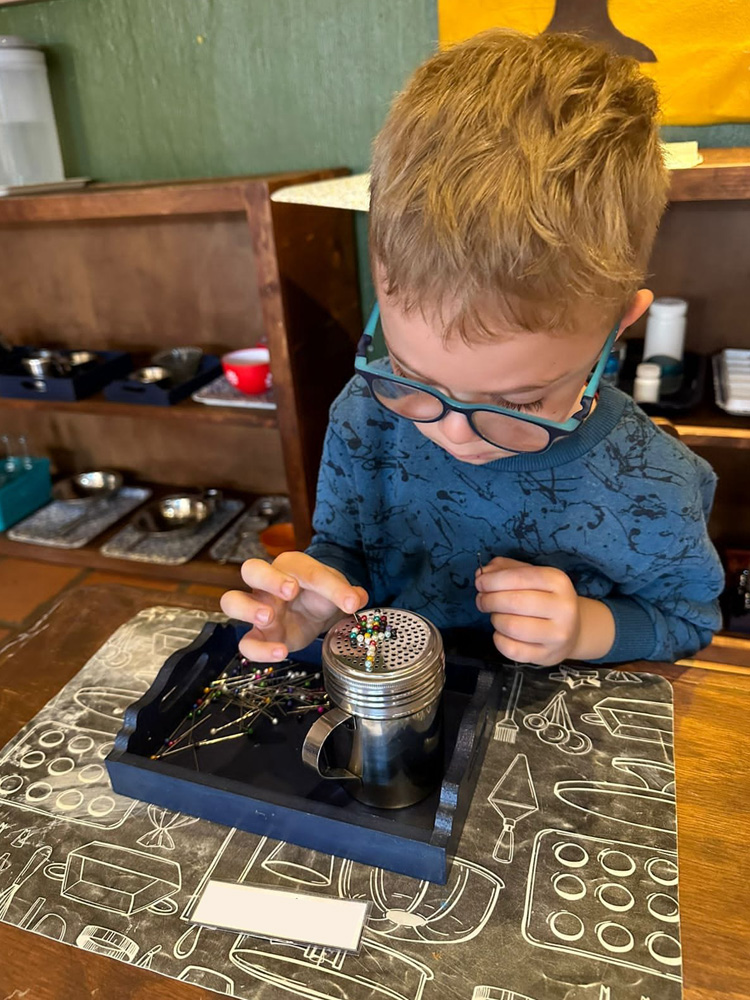
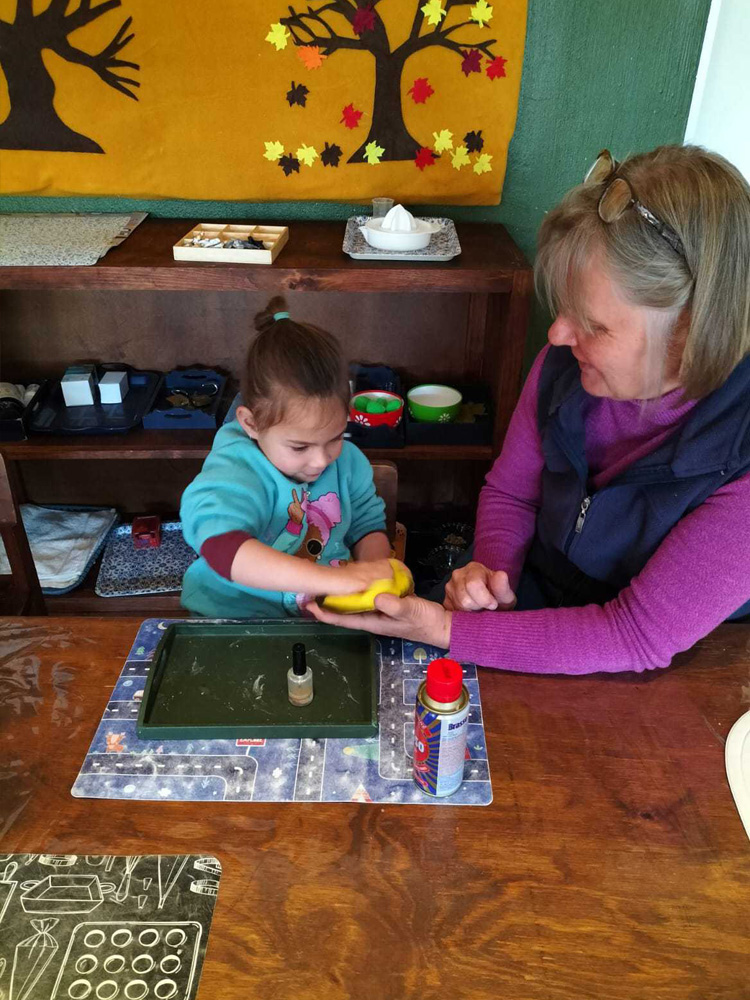
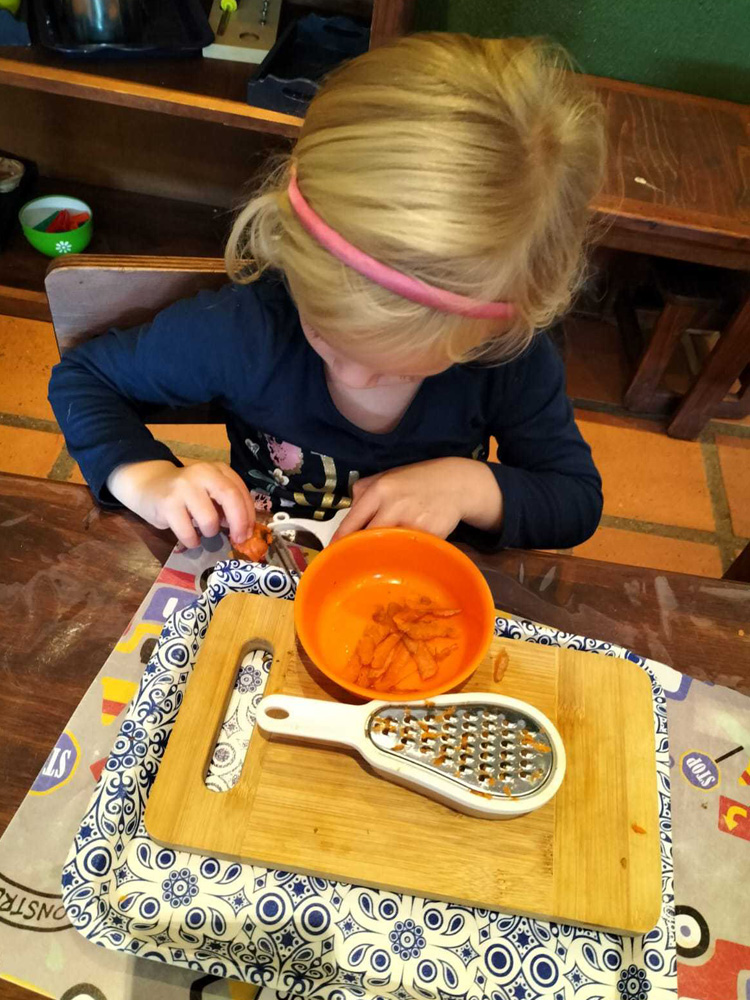
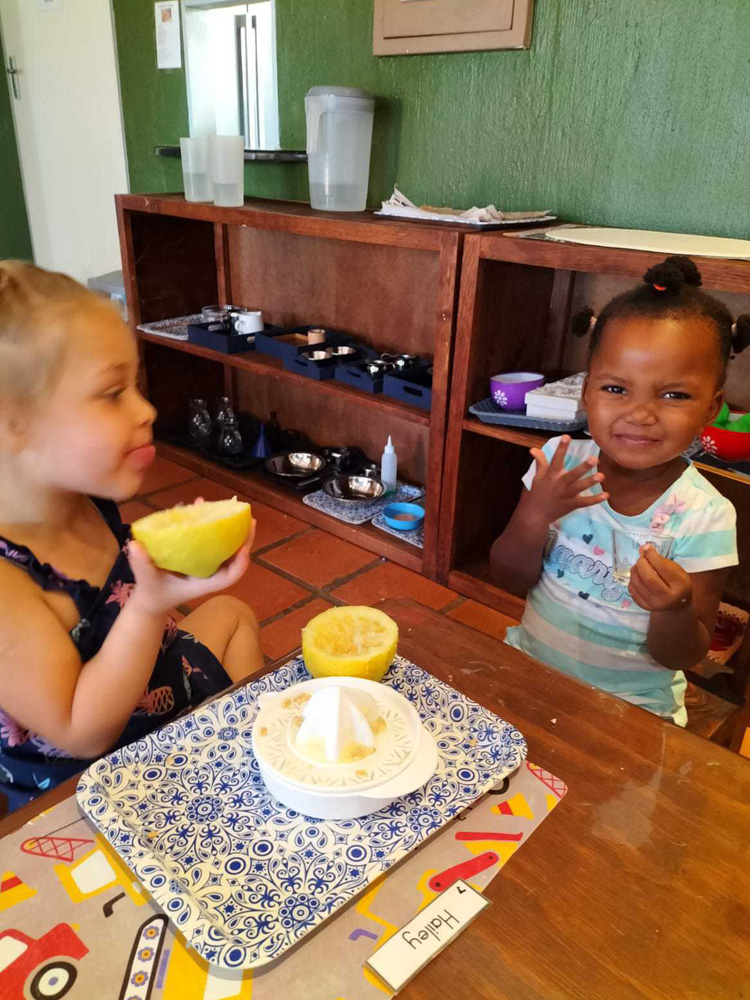
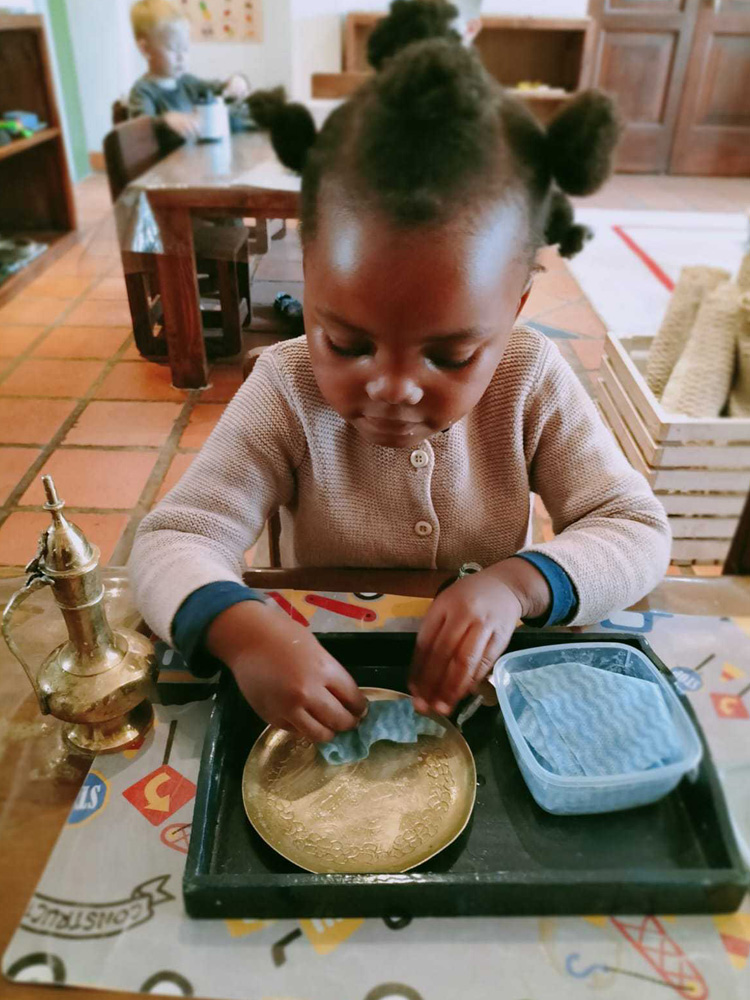
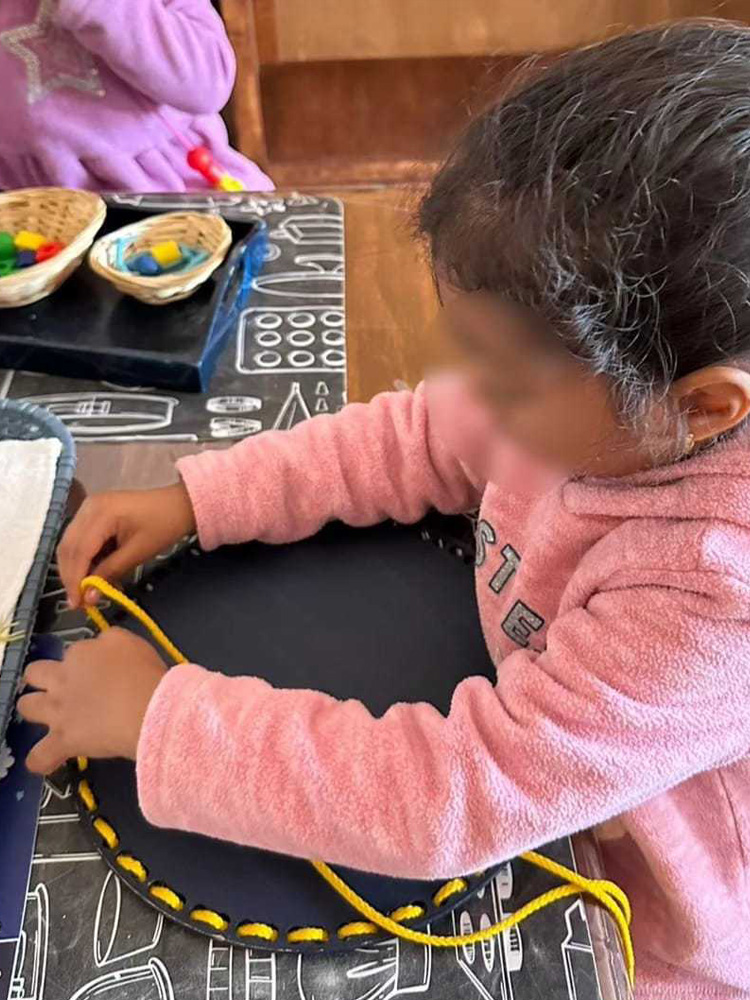
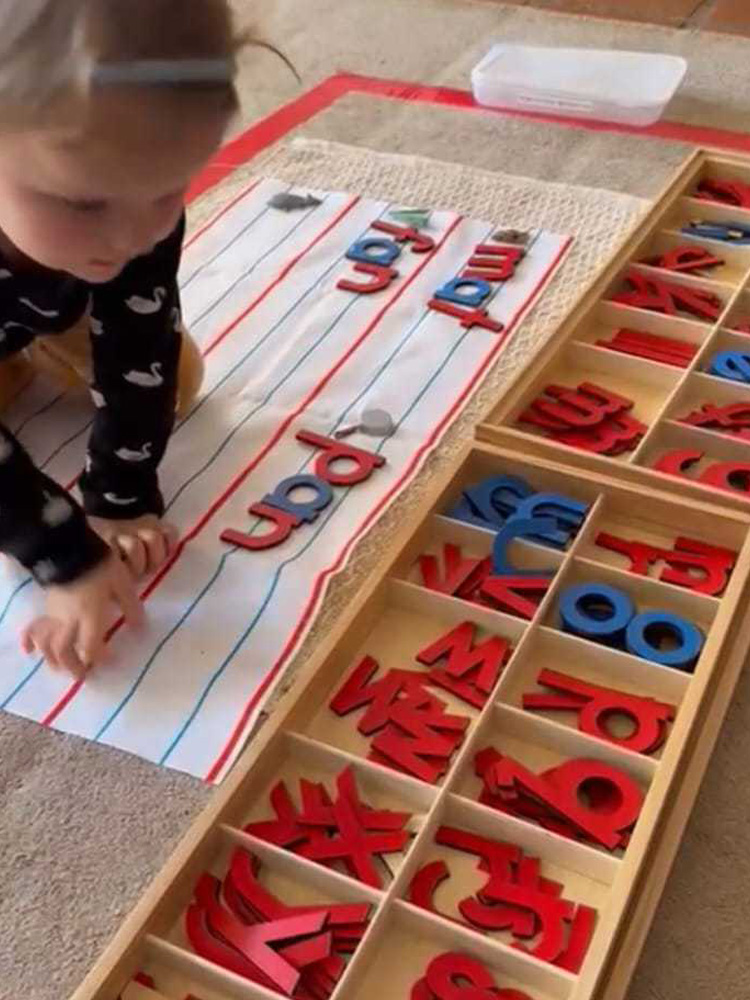
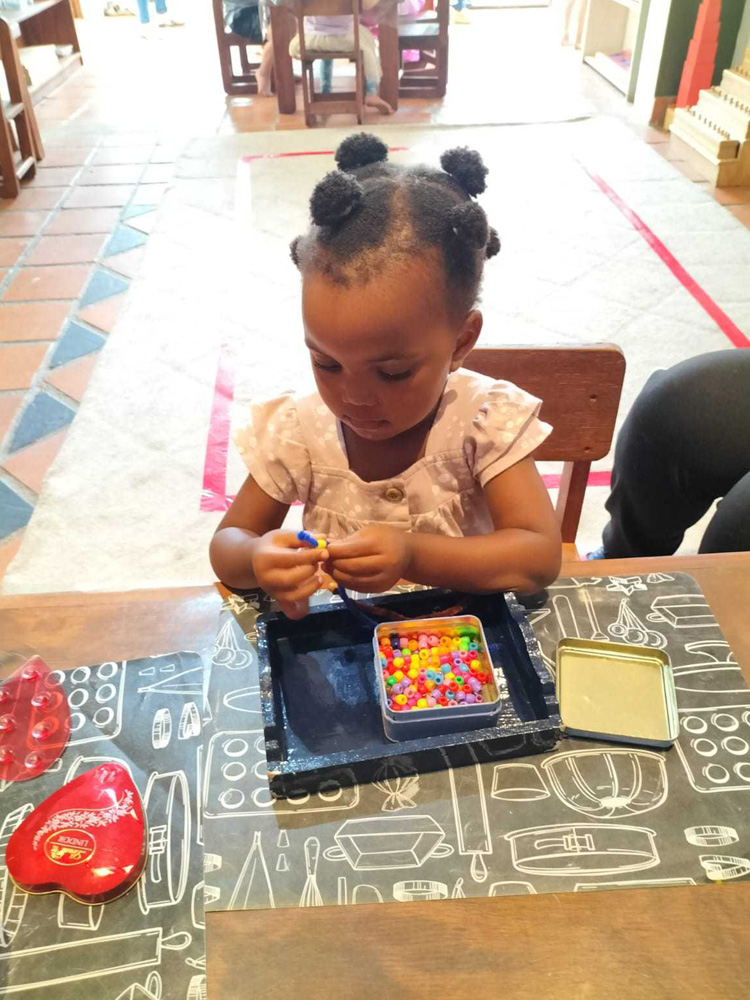
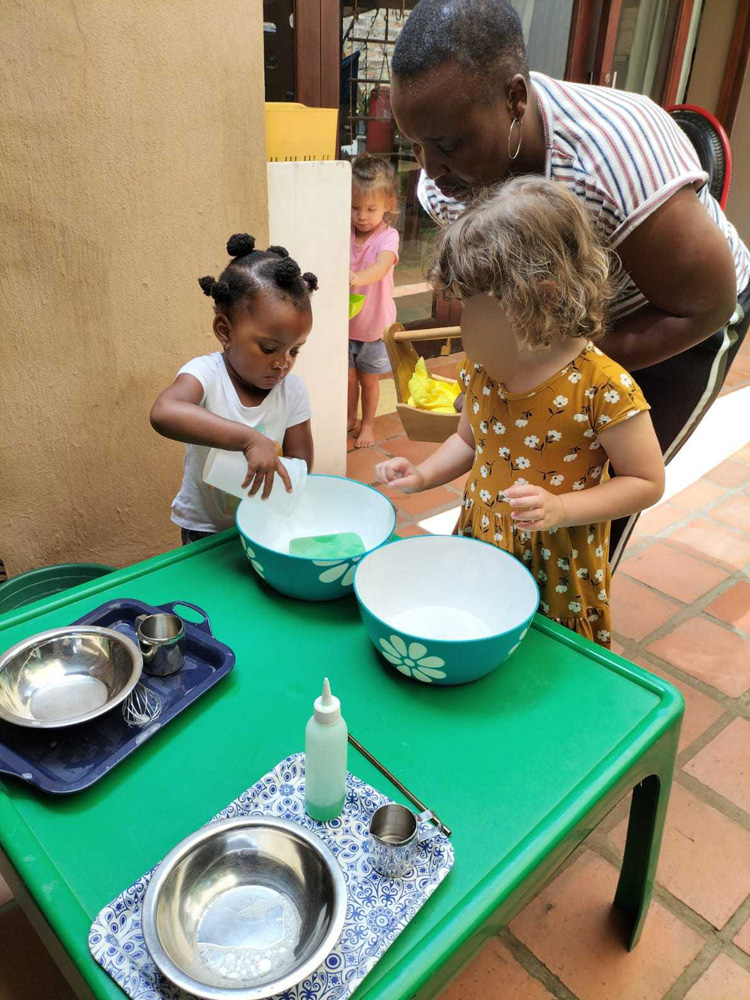
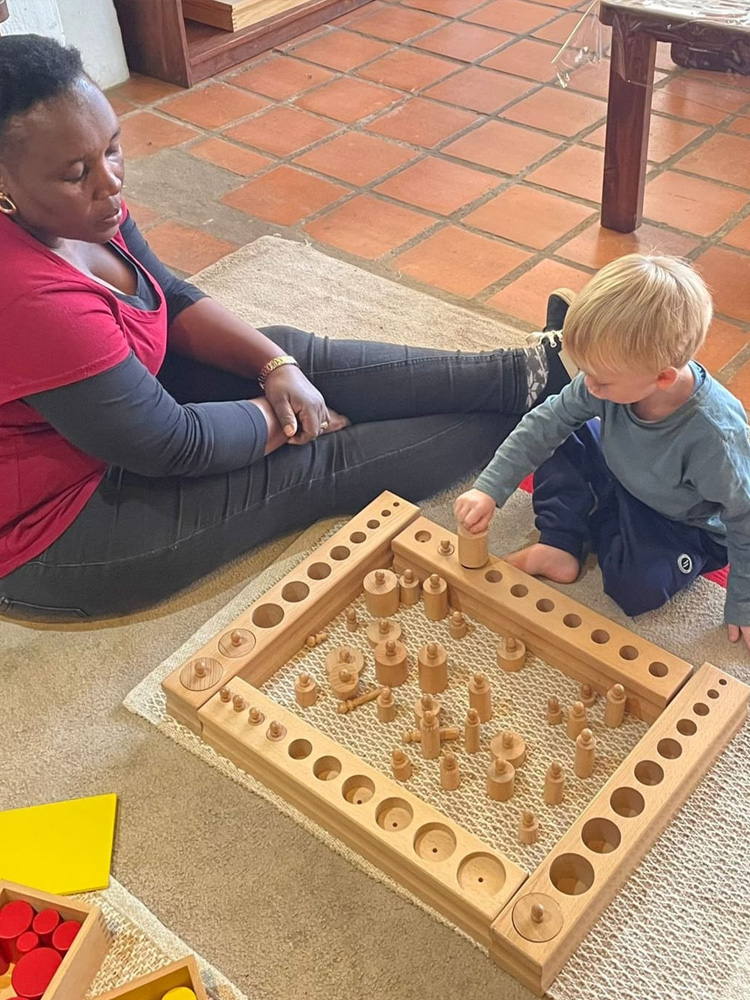
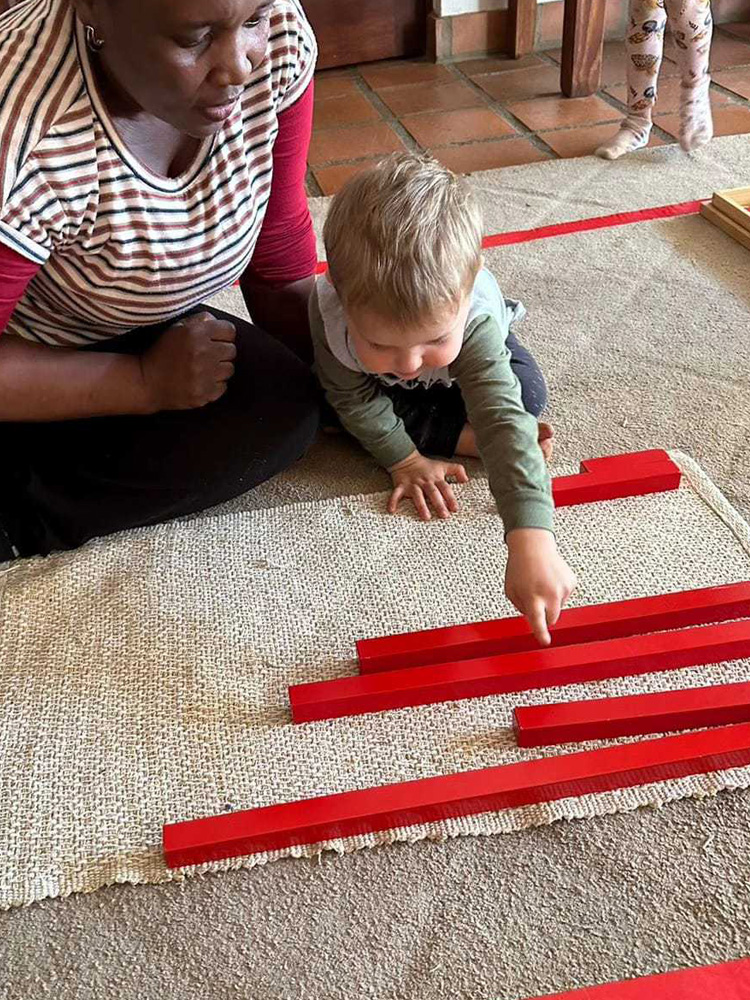
“The children of three years of age in the “Children’s Houses” learn and carry out such work as sweeping, dusting, making things tidy, setting the table for meals, waiting at table, washing the dishes, etc. and at the same time they learn to attend to their own personal needs, to wash themselves, to take showers, to comb their hair, to take a bath, to dress and undress themselves, to hang up their clothes in the wardrobe, or to put them in drawers, to polish their shoes . These exercises are part of the method of education, and do not depend on the social position of the pupils; even in the “Children’s Houses” attended by rich children who are given every kind of assistance at home, and who are accustomed to being surrounded by a crowd of servants, take part in the exercises of practical life . This has a truly educational, not utilitarian purpose. The reaction of the children may be described as a “burst of independence” of all unnecessary assistance that suppresses their activity and prevents them from demonstrating their own capacities. It is just – these “independent” children of ours who learn to write at the age of four and a half years, who learn to read spontaneously, and who amaze everyone by their progress in arithmetic.”
– Dr Maria Montessori
Daily routine
3 years - 6 years
07:00 – 08:30 Drop off & outside free play
08:30 – 11:00 Morning circle and work cycle *snack at 10:00
11:30 – 12:00 Outside free play
12:00 Lunch
12:30 Rest Time, Story time
12:30 Half-day children go home
14:00 Those who sleep, wake up from nap
14:30 Afternoon snack
15:00 Home time
15:00 – 17:00 Aftercare: outdoor play until parents arrive
07:00 – 08:30
Drop off & outside free play
08:30 – 11:00
Morning circle and work cycle *snack at 10:00
11:30 – 12:00
Outside free play
12:00
Lunch
12:30
Rest Time, Story time
12:30
Half-day children go home
14:00
Those who sleep, wake up from nap
14:30
Afternoon snack
15:00
Home time
15:00 – 17:00
Aftercare: outdoor play until parents arrive
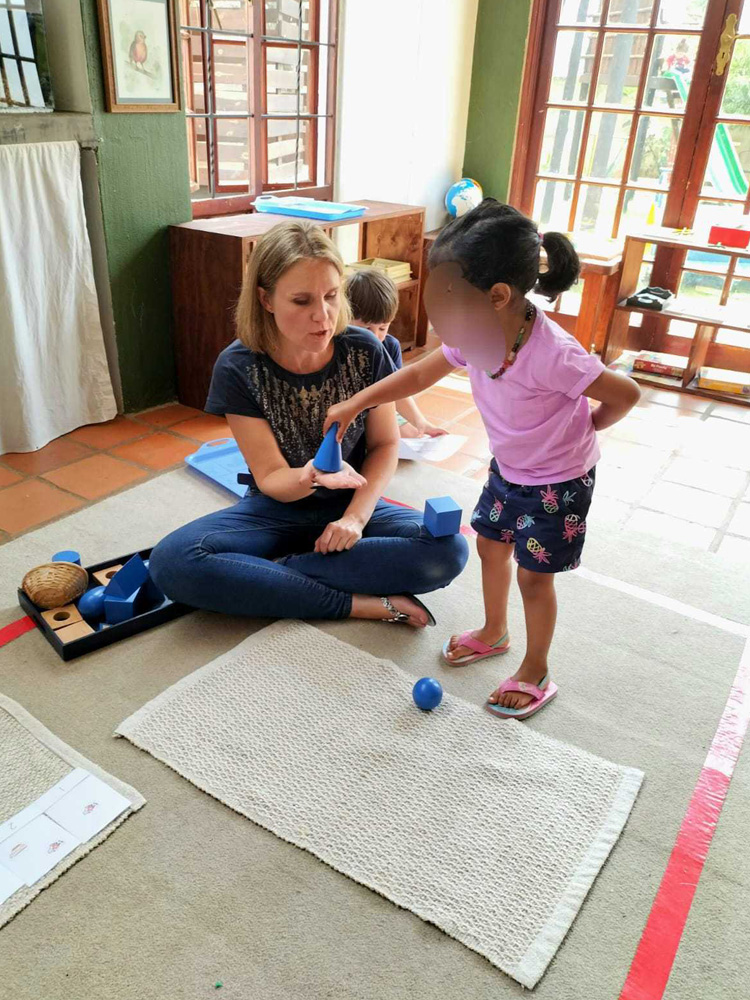
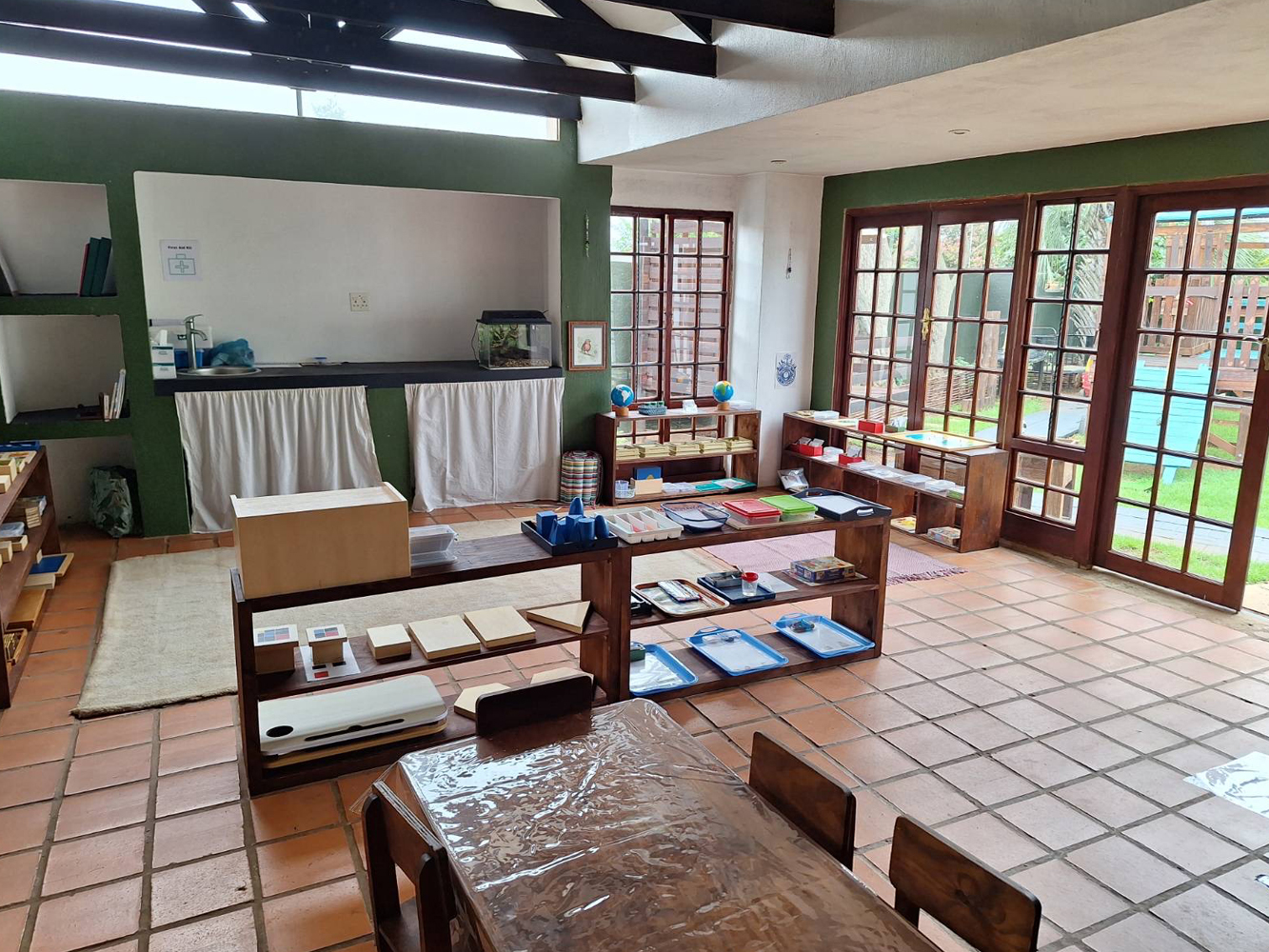
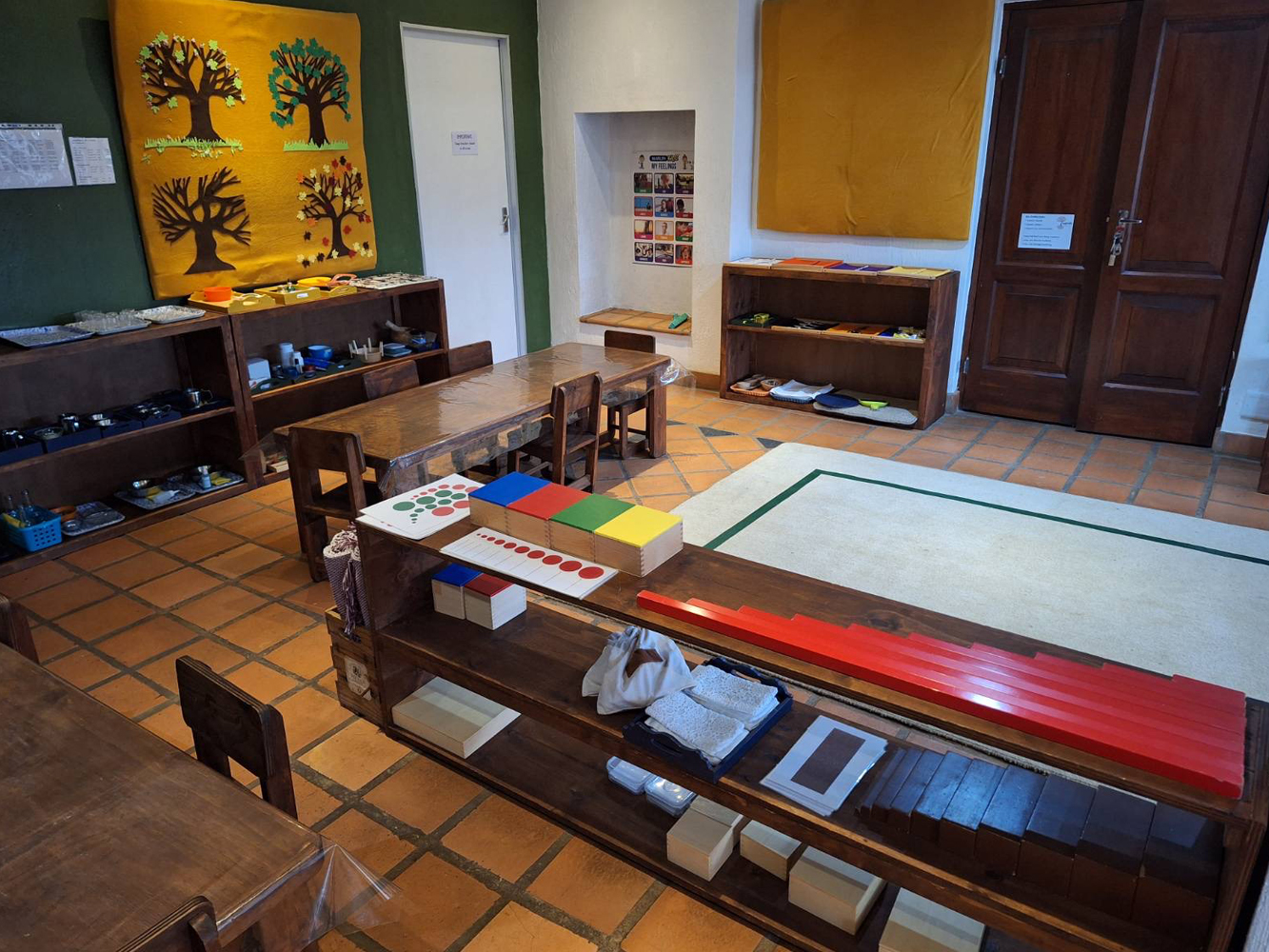
In our 3 – 6 year group, the environment is prepared by Montessori-trained adults,
according to the fundamental principles of the Montessori Method.
The curriculum includes the following areas:
Sensorial Development –
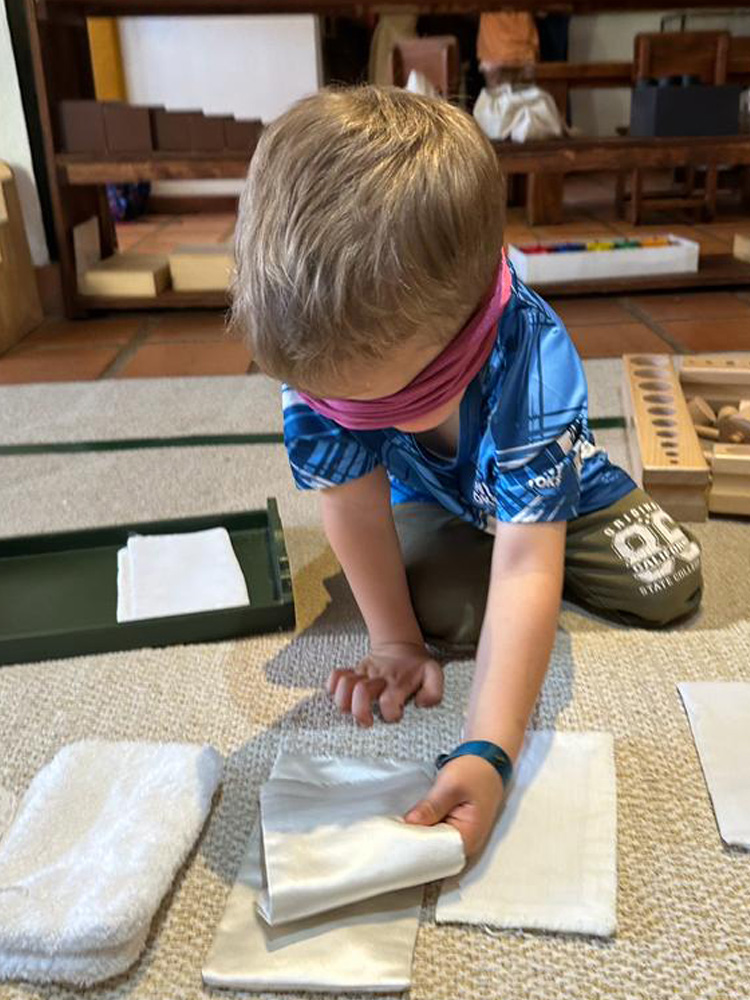
The exercises of the senses include exercises through which children learn to attend to their perceptions and to discriminate between finer and finer variation using all of their senses. Children are able to create a mental inventory of all of the information taken in from their environment. This is the absorbent mind at work.
Practical Life –
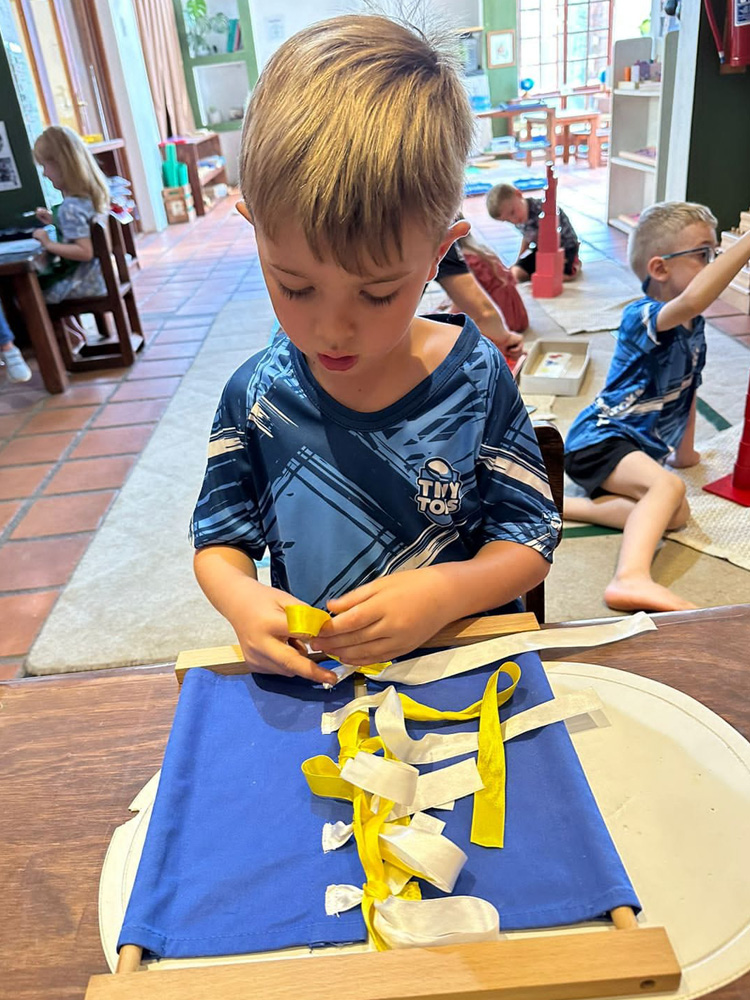
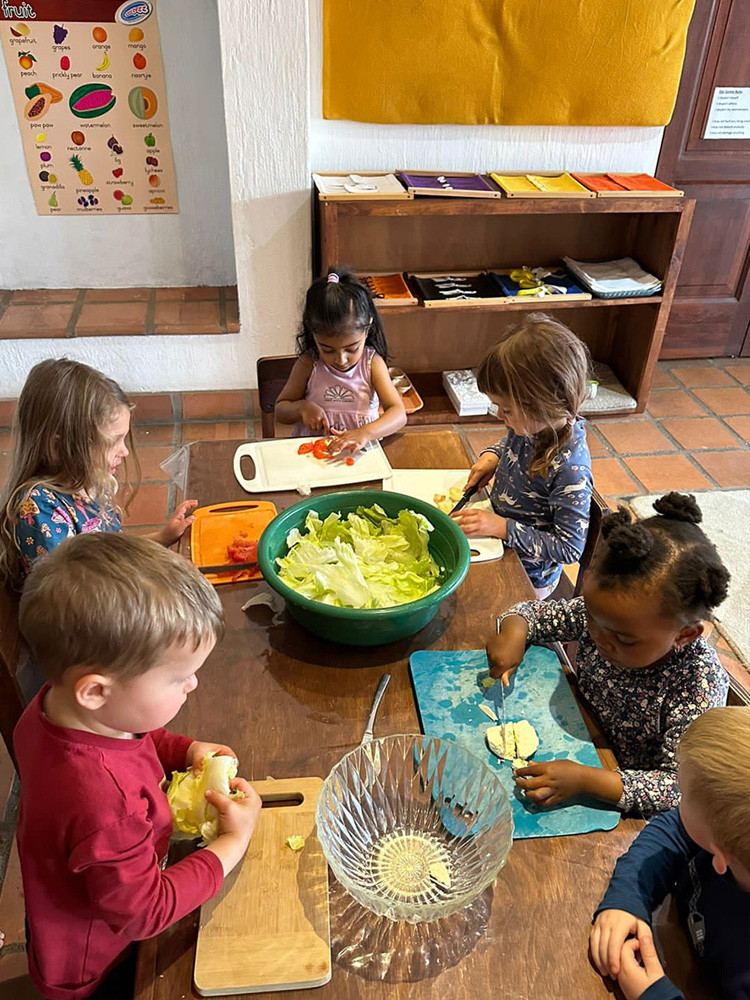
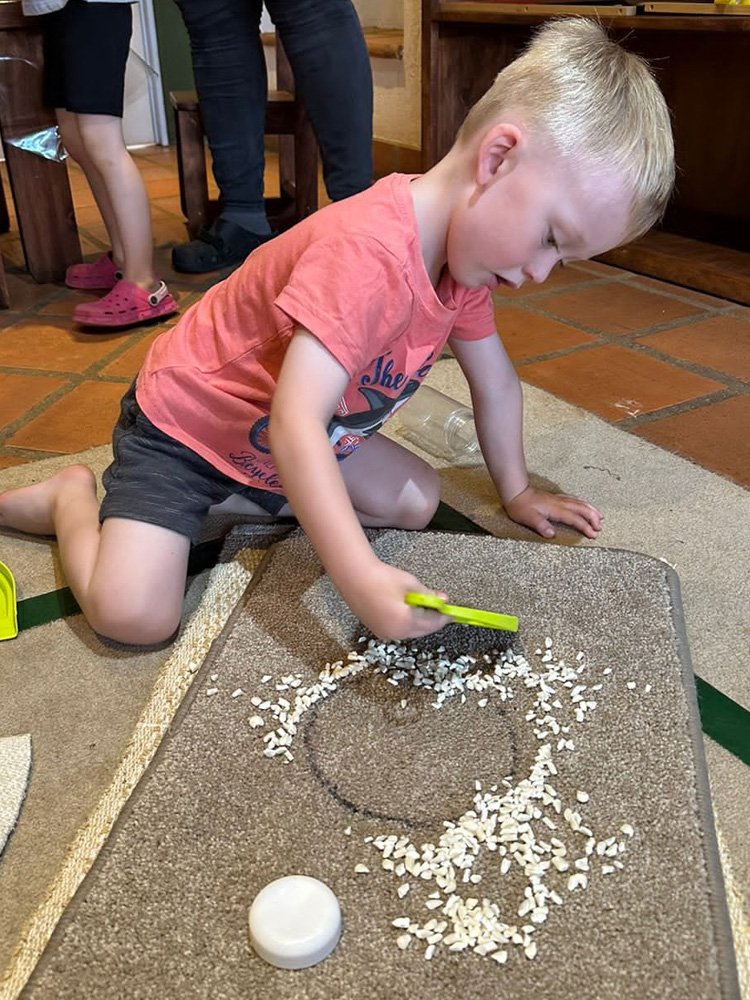
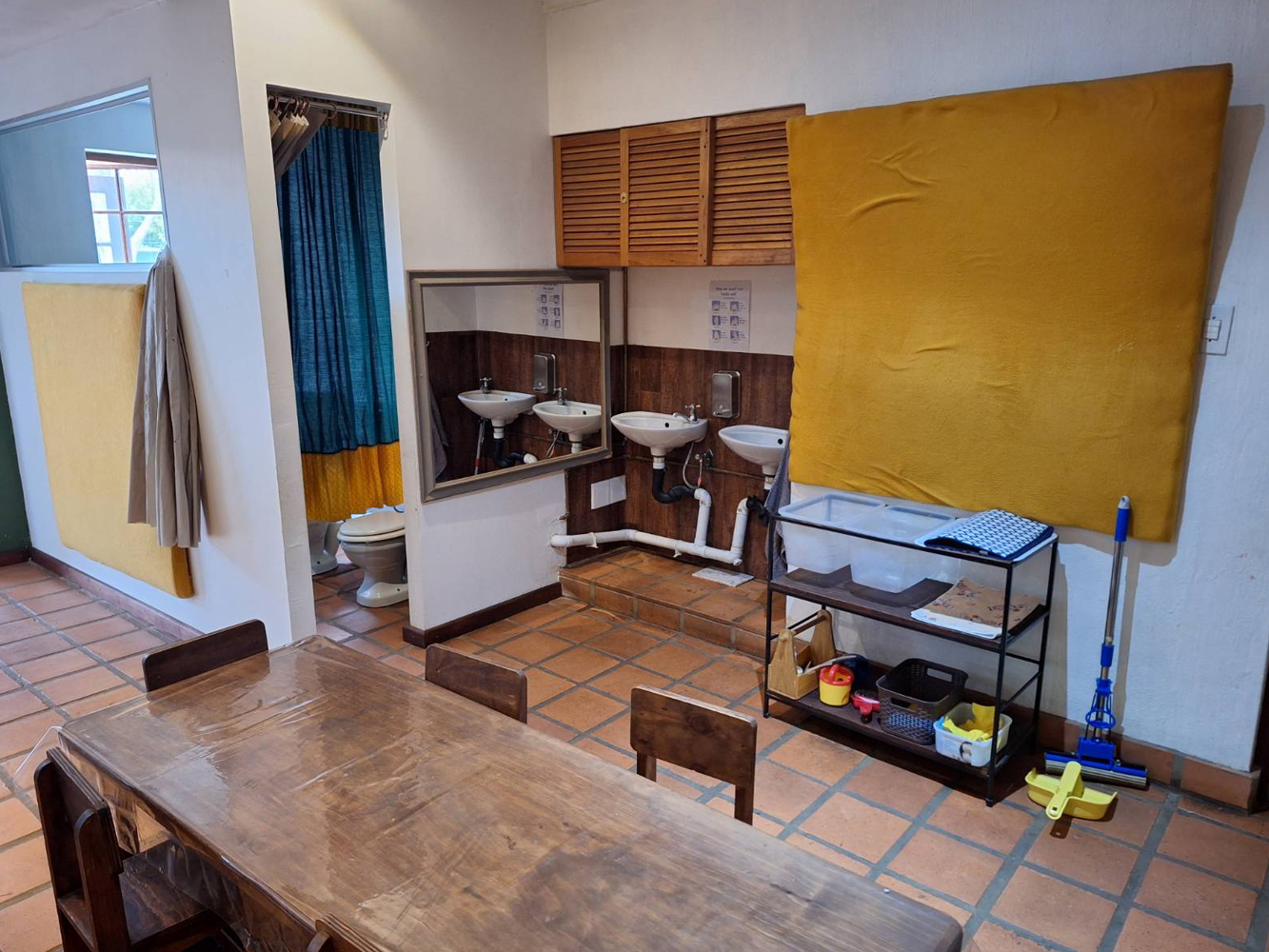
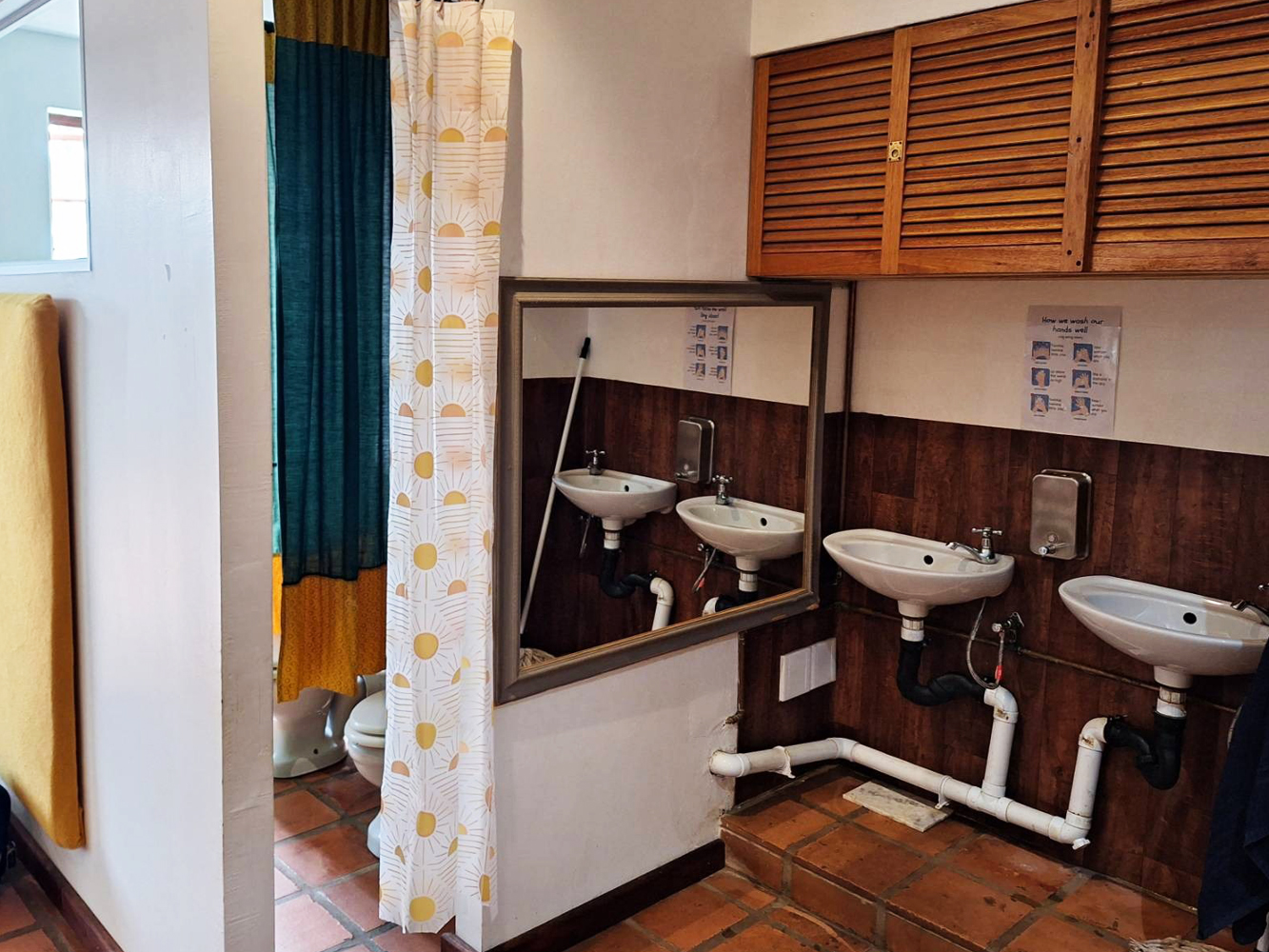
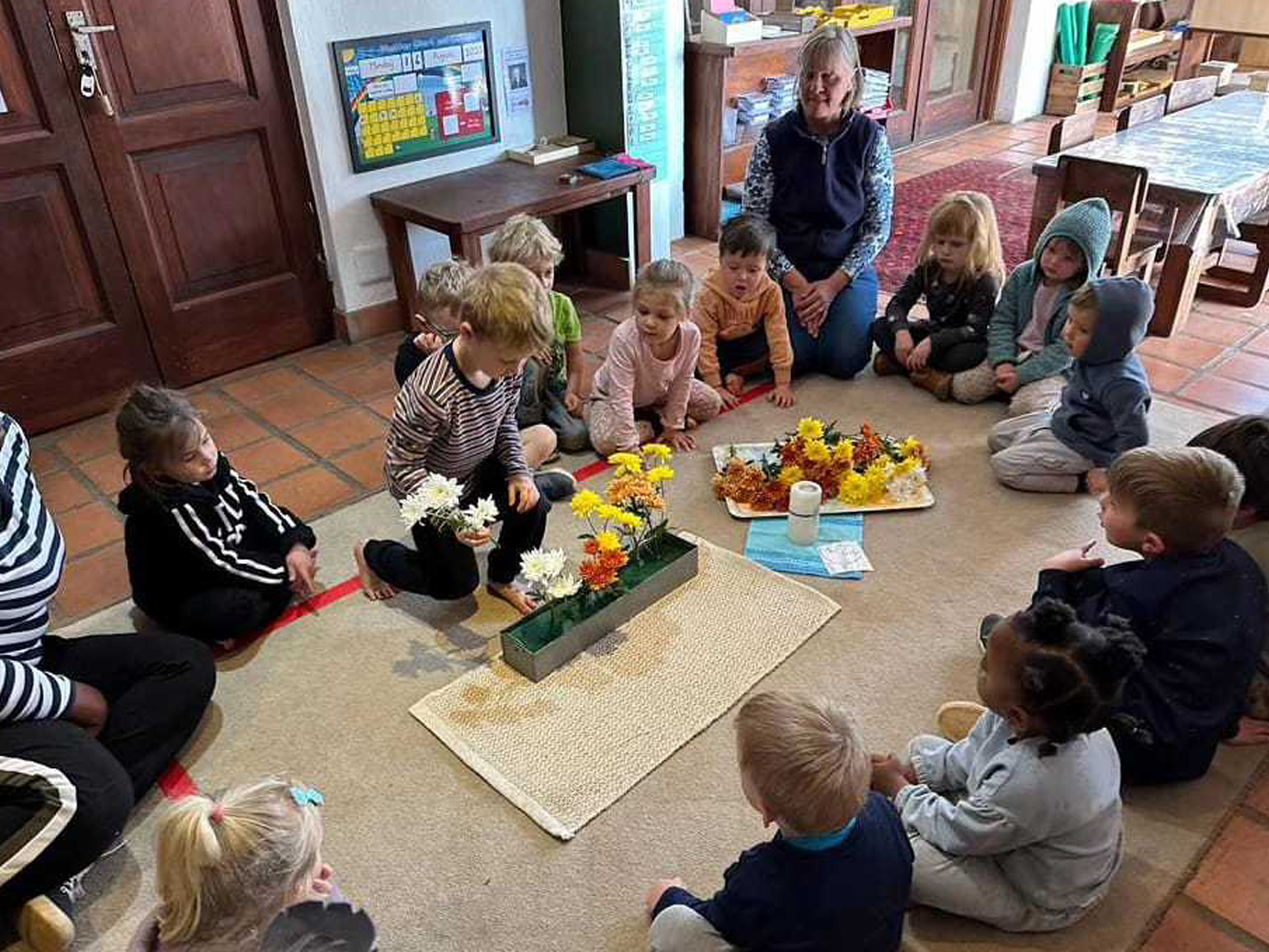
These are activities of daily living that offer the children an opportunity to become skilled and independent in the basic parts of caring for themselves, their bodies and their surroundings. Children love order, and they love to be independent, and this desire finds expression in the exercises of practical life. The children enjoy regular baking and cooking activities, often using ingredients that they have planted and harvested themselves. The annual high tea farewell celebration is the highlight of the year. The children are involved in every part of the process, from moving the furniture, to preparing parts of the meal to setting the table and arranging the flowers, right through to serving the eats and tea to their younger peers.
Personal Development and Incorporating the Lessons of Grace and Curtesy –
Personal development revolves around the lessons of grace and courtesy, the Montessori lessons designed to ensure the needs of everyone in the setting are respected and to promote social harmony.
Language Development –
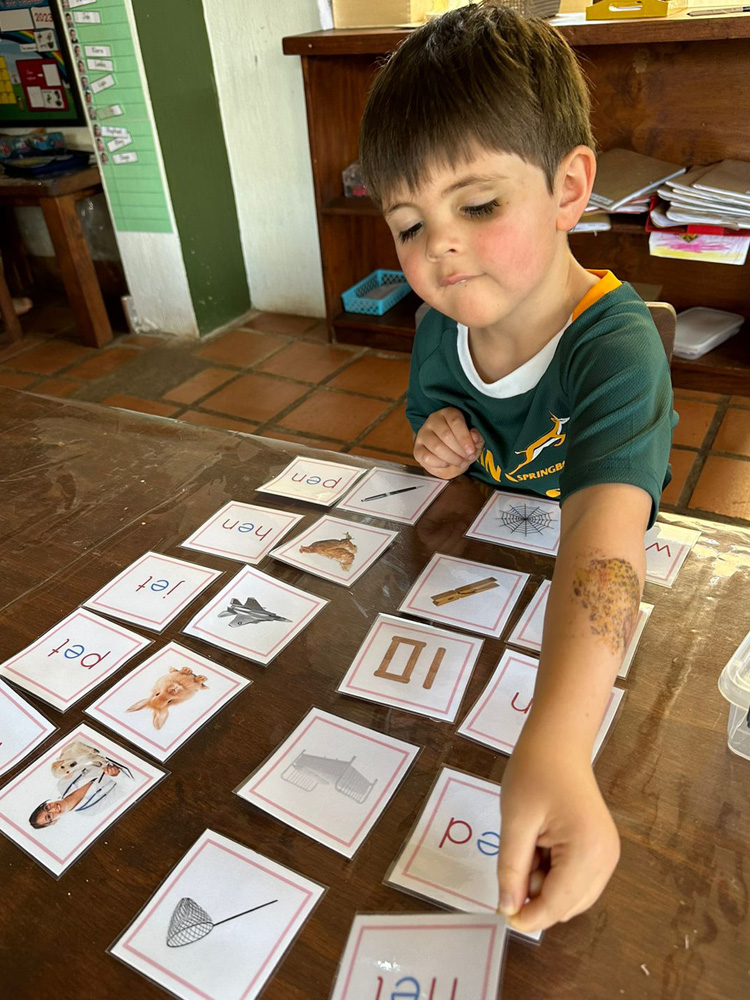
Language is both expressive as well as receptive. Children have the opportunity to enjoy a wide range of good quality and varied literature, as well as factual and reference books. Emphasis is placed on the process of learning language. Knowledge is built by mental and physical activity rather than on passive learning. Writing is learned before reading through the direct and indirect aims of the Practical Life and Sensorial works. Writing itself is seen as a direct preparation for reading.
Mathematics –
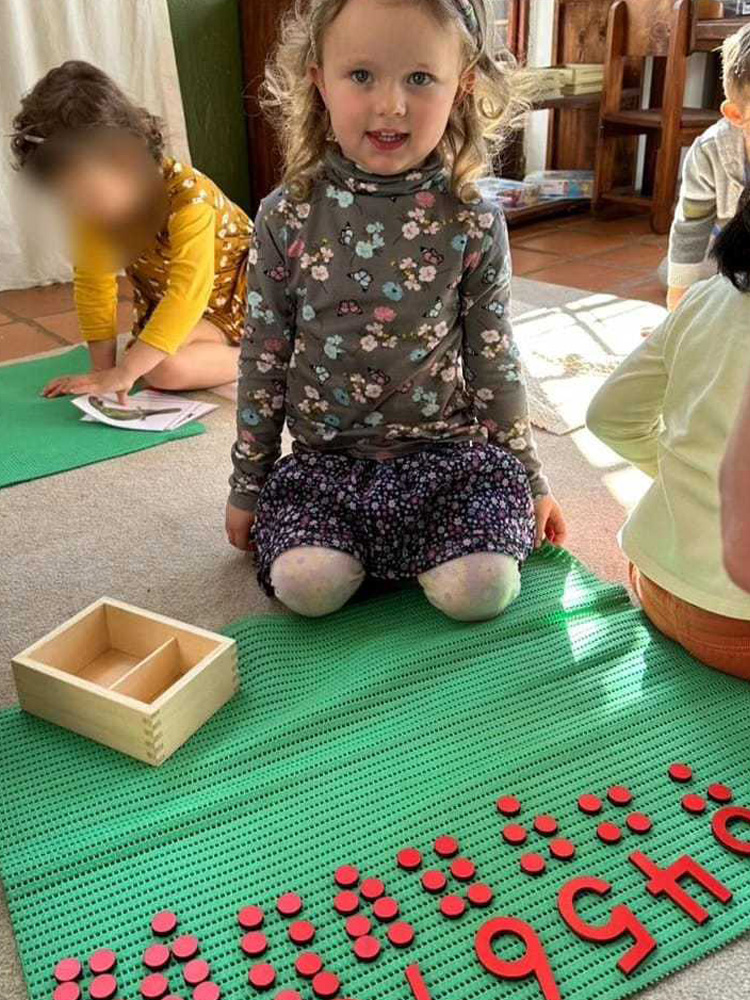
The study of mathematics is a reflection of the human tendencies for investigation and orientation, for order and classification, for reasoning and making judgements, and for calculating and measuring. Mathematical concepts are introduced through our special Montessori didactic equipment. These concrete materials offer the children an opportunity to explore mathematical concepts using their both their hands and minds. The materials are often presented as games and children are free and encouraged to repeat these as often as they like.
Cultural Subjects: Science, Geography, History, Art -
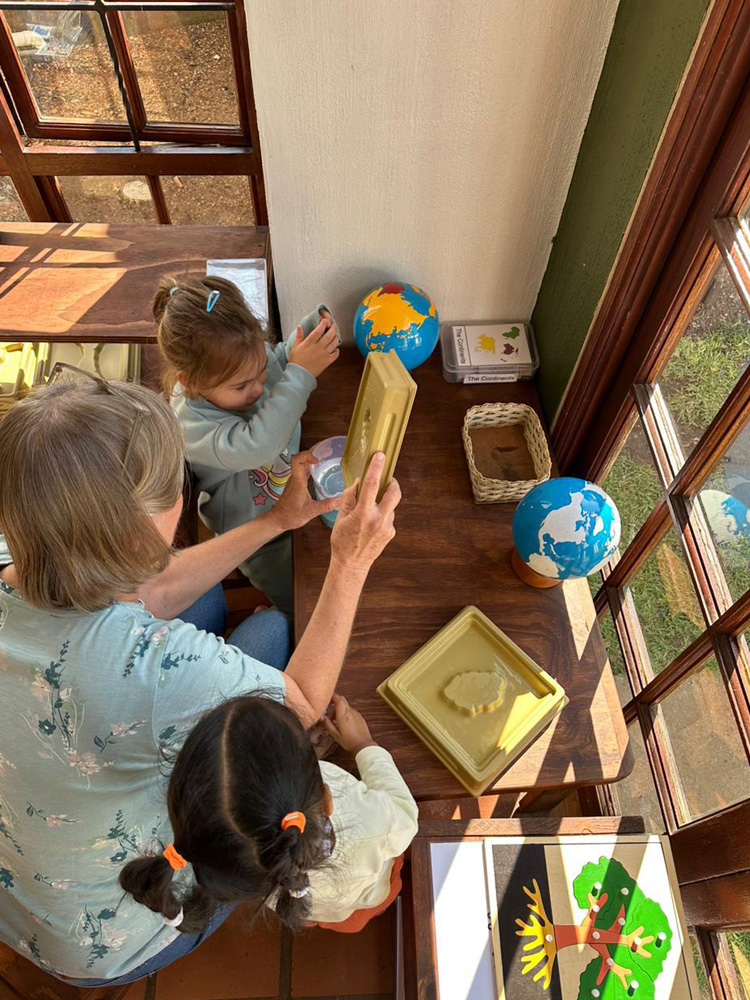
Children learn to appreciate the natural world and social world through their senses. The materials are presented to children in concrete form that they can manipulate in purposeful ways. Activities allow for freedom of choice and repetition, creates a love and respect for the natural world and gives the children a grounding in reality.
Art –
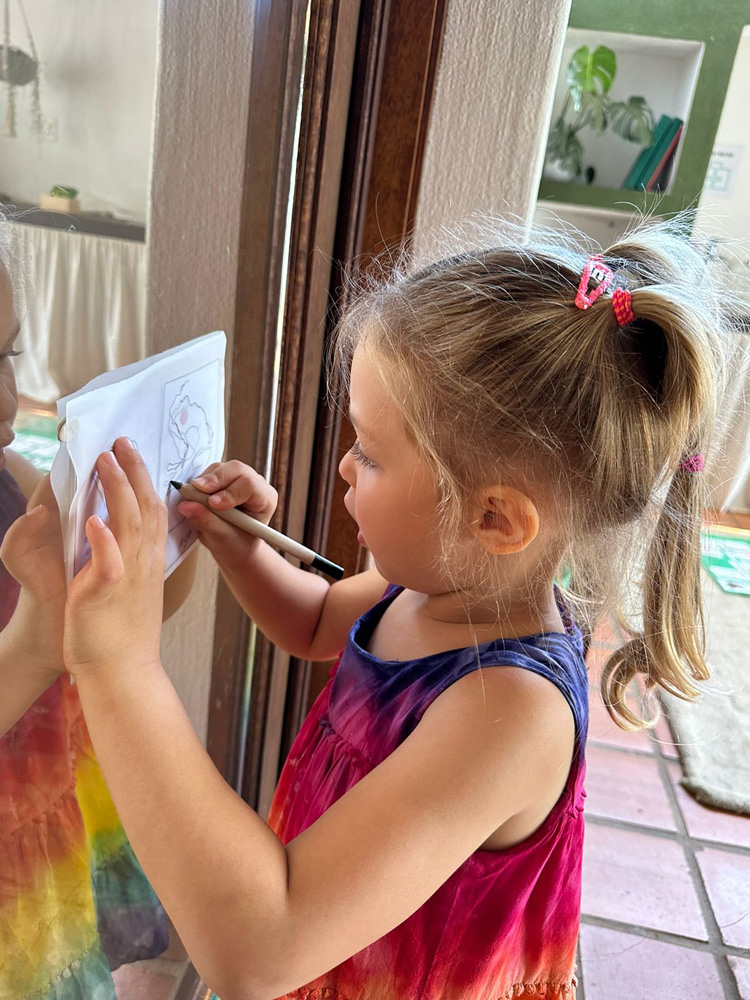
Art activities include drawing, painting, design work, collage making, bead work, printing, flower arranging, sewing, modelling with clay and colour mixing. Techniques and processes for using different media are shown to the children in small groups.