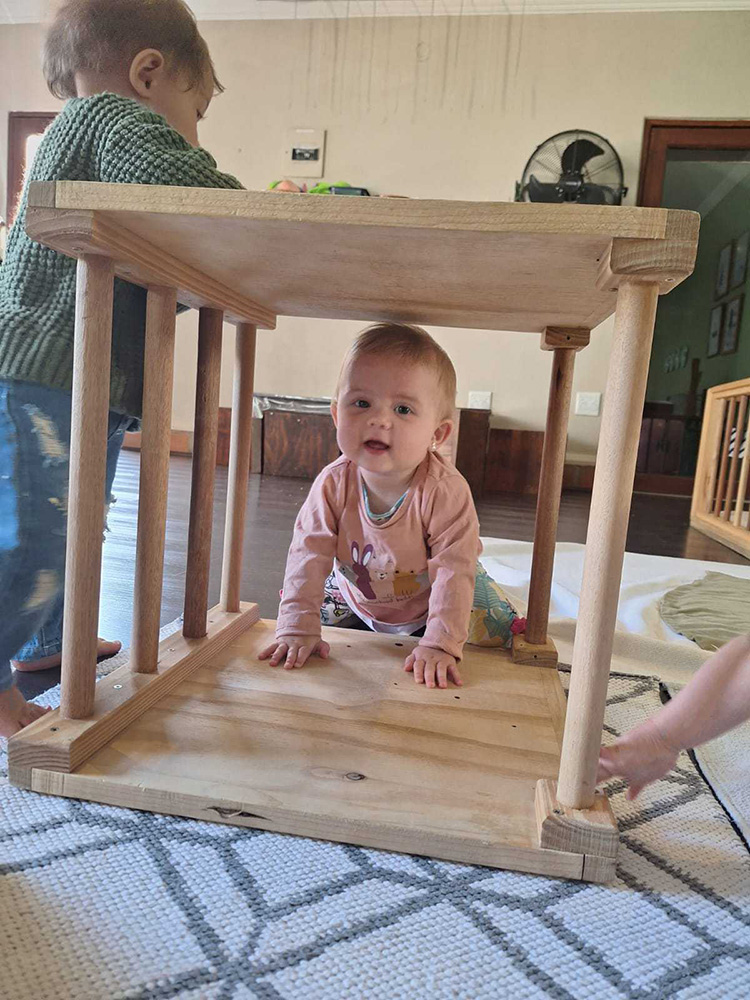
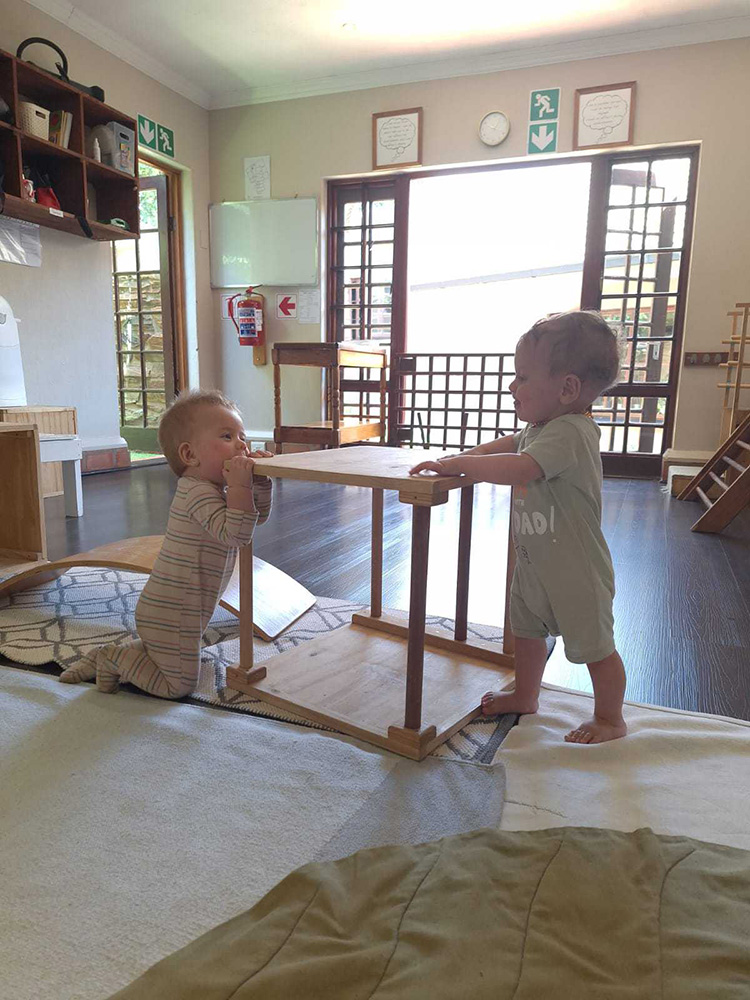
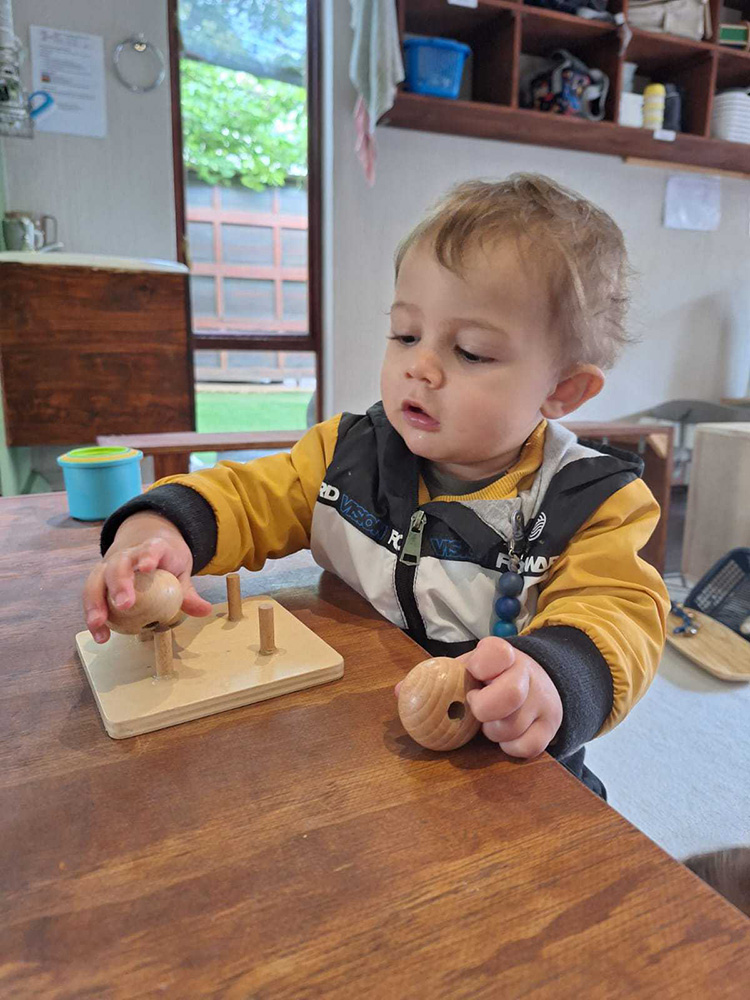
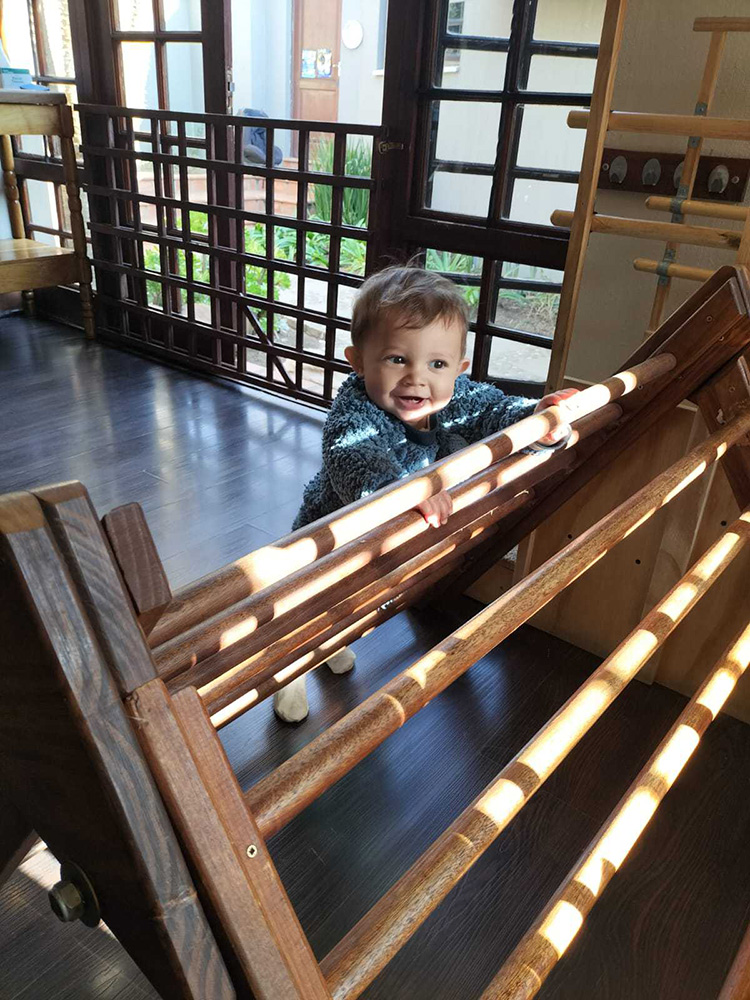
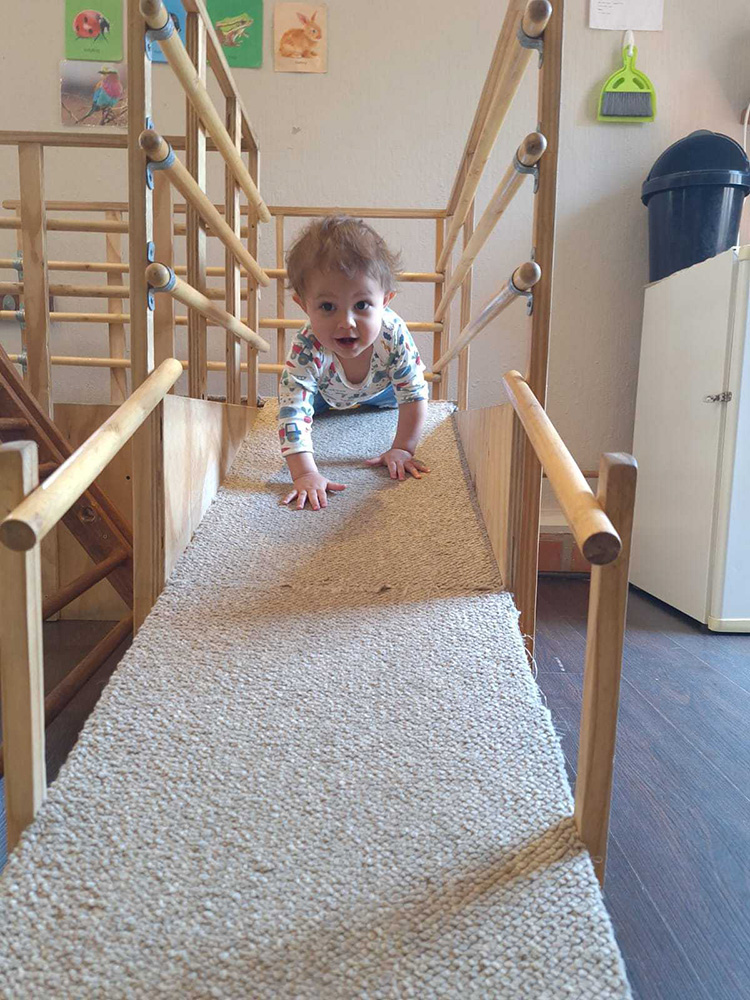
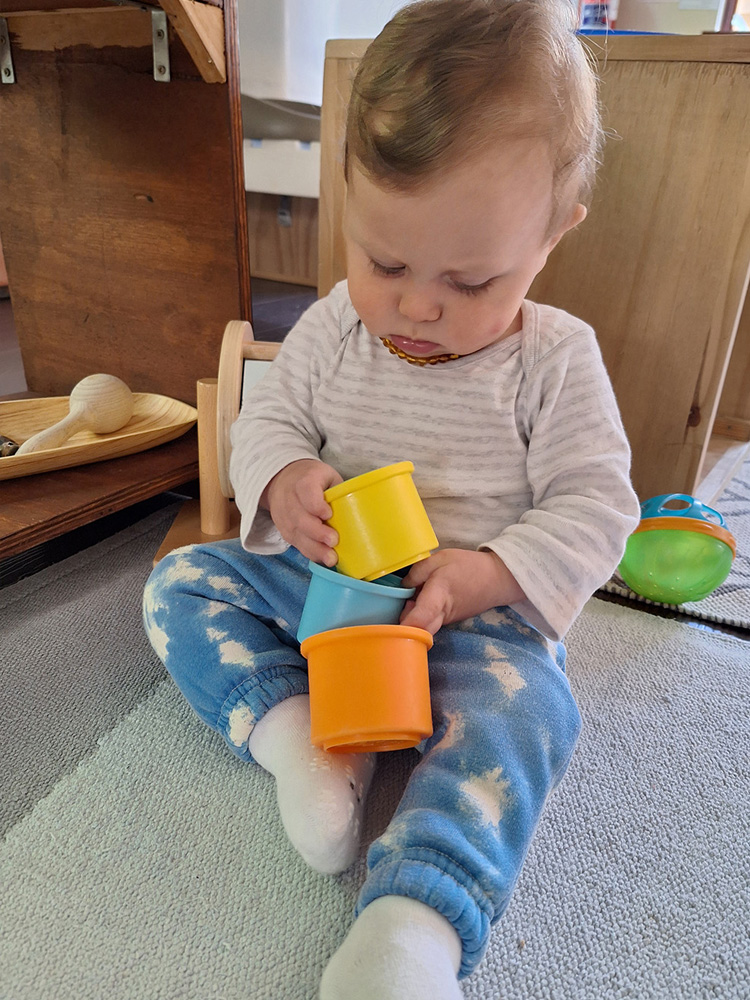
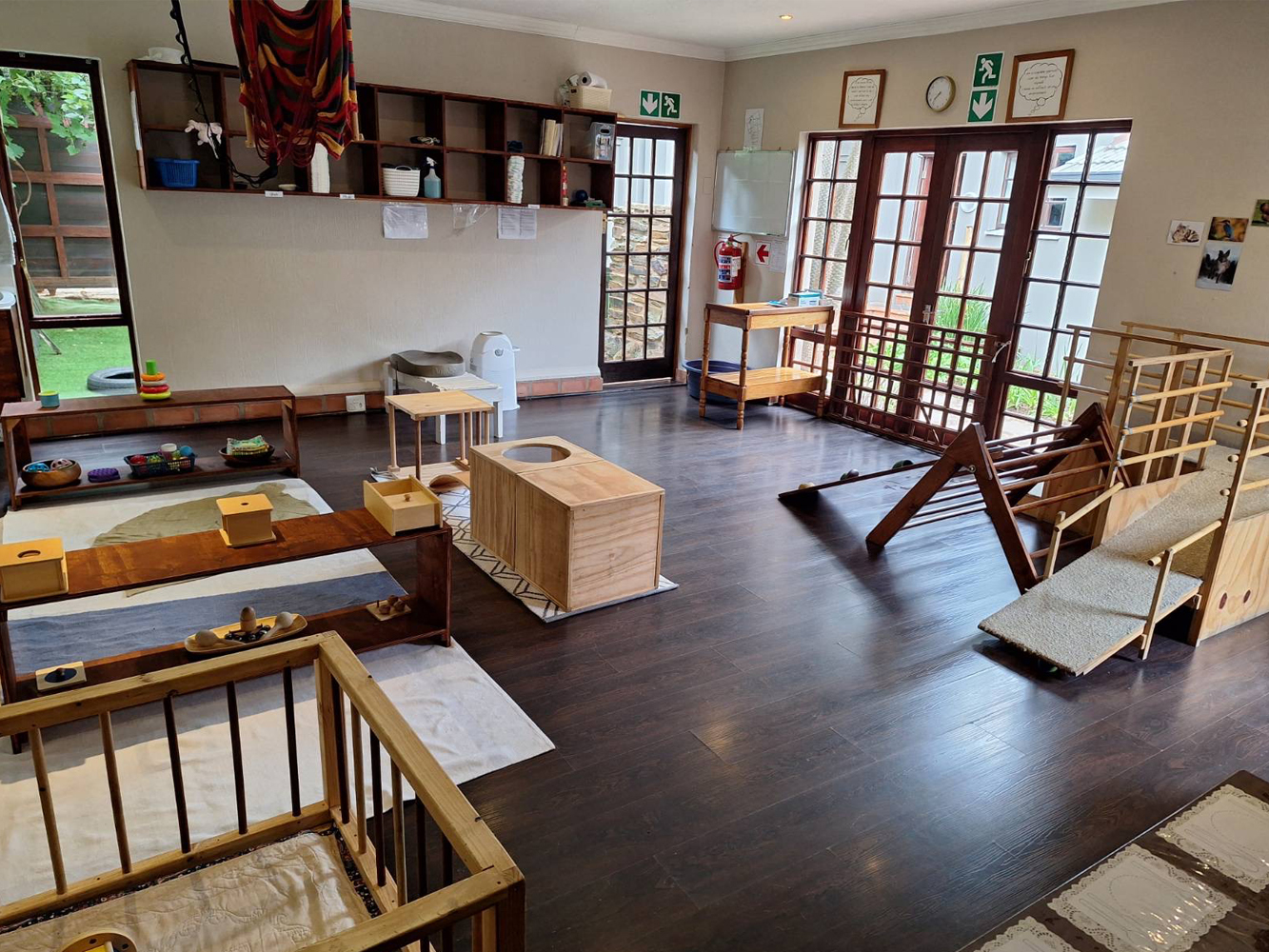
“The tiny child’s absorbent mind finds all its nutriment in its surroundings. Here it has to locate itself, and build itself up from what it takes in. Especially at the beginning of life must we, therefore, make the environment as interesting and attractive as we can. The child, as we have seen, passes through successive phases of development and in each of these his surroundings have an important – though different – part to play. In none have they more importance than immediately after birth.”
– Dr Maria Montessori
Daily routine
3 months to around 18 months / confidently walking
07:00 – 08:00 Arrival at school
08:00 Nappy checks
08:30/09:00 Babies on 2 sleeps, go to sleep
After waking: Nappy checks, milk, snack, free exploration of the environment.
12:00 Lunch for babies on solids
12:30 After lunch, nappies checked, nap time again,
12:30 Half-day babies are fetched.
After waking: Nappy checks, milk, snack, free exploration of the environment
15:00 Another home time for some babies, this is when aftercare starts,
babies play outside in a shaded safe area under the
grapevine canopy until home time.
07:00 – 08:00
Arrival at school
08:00
Nappy checks
8:30/09:00
Babies on 2 sleeps, go to sleep
After waking:
Nappy checks, milk, snack, free exploration of the environment.
12:00
Lunch for babies on solids
12:30
After lunch, nappies checked, nap time again,
12:30
Half-day babies are fetched.
After waking:
Nappy checks, milk, snack, free exploration of the environment
15:00
Another home time for some babies, this is when aftercare starts, babies play outside in a shaded safe area under the grapevine canopy until home time.
Dr Montessori believed that infants need an environment reminiscent of home where they can feel safe and loved. She felt that the word “Nido”, which is “Nest” in Italian, was the perfect word for a suitable infant environment. In the Nido, we do not follow strict routines, but follow the cues of each child individually as they develop. For example, a 3-month-old baby and a 10-month-old baby are not on the same sleep schedule and to expect them to sleep at the same time is unrealistic. In between caring for the baby’s daily needs, the carers attentively play with and help to mediate their interactions with each other. Forming a nurturing bond and healthy attachment to their care-taker is essential, as babies are then free to develop self-assurance as they feel confident in themselves and their worth as a person.